
Dostarlimab: Is It Really Curing Cancer? (2026 Update)
Not in general.
For one small group of people with a specific type of rectal cancer, dostarlimab has made the cancer disappear on scans and exams, in some cases without chemo, radiation, or surgery.
That is very good news, but doctors are careful about the word “cure.”
Here is what we know as of October 2026.
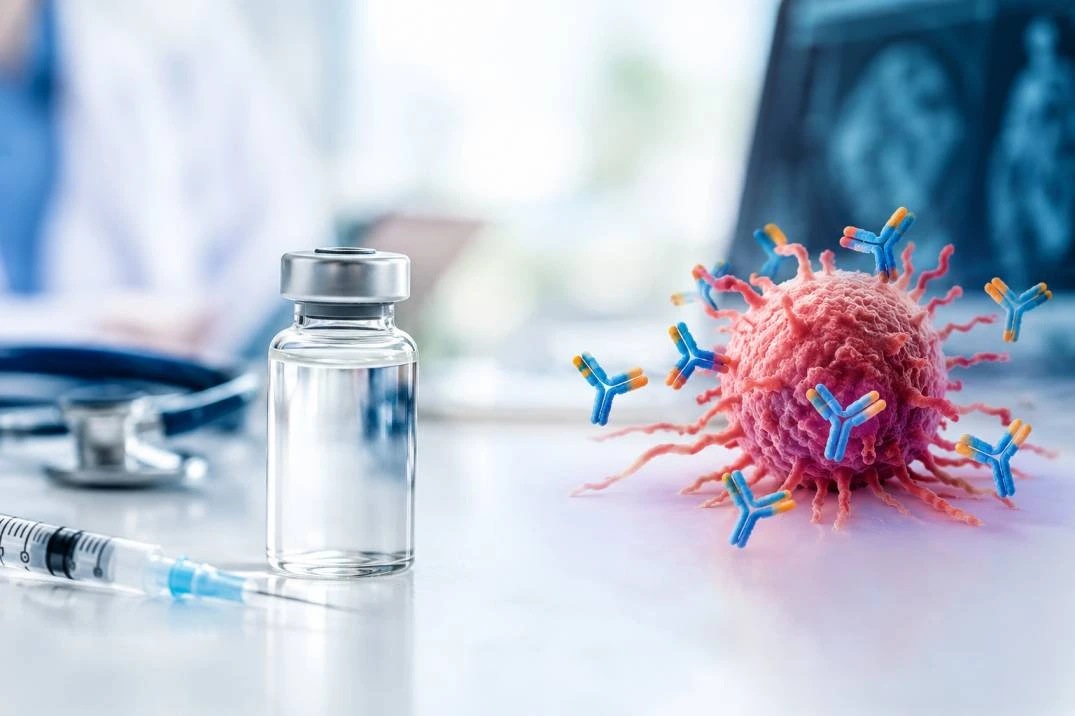
What is dostarlimab?
Dostarlimab (brand name Jemperli, made by GSK) is an immunotherapy drug. It does not poison cancer cells like chemo.
It helps your own immune system find and attack the cancer.
Some cancer cells hide from the immune system by pressing a “brake” on immune cells. Dostarlimab releases that brake. It is given through an IV drip, usually in a hospital or clinic.
Why is everyone saying it “cures” cancer?
The headlines came from a small study at Memorial Sloan Kettering Cancer Center in the US. People with a certain kind of rectal cancer took dostarlimab alone, and their tumors disappeared.
Early reports said 100% of patients had no sign of cancer, which sounded like a miracle.
In 2026, updated findings from that original study reported that all 42 patients who completed treatment achieved a clinical complete response.
“Clinical complete response” means doctors cannot find any cancer on scans, scopes, and exams. It does not automatically mean the cancer is gone forever, which is why the word “cure” is used so carefully.
Which cancer does this work for?
Not all rectal cancers. It works for cancers called dMMR (mismatch repair deficient) or MSI-H (microsatellite instability-high).
Both terms describe the same thing: the cancer cells cannot fix mistakes in their DNA. This makes them easy for the immune system to spot once the brake is released.
Only a minority of rectal cancers have this feature, so most rectal cancer patients are not in this group. A simple lab test on the tumor tissue can tell you whether yours is dMMR/MSI-H.
What is the latest news in 2026?
- July 2026: GSK announced results from a larger trial called AZUR-1. It enrolled 154 patients with untreated stage II/III dMMR/MSI-H rectal cancer. It met its main goal: patients stayed free of detectable cancer 12 months after finishing six months of dostarlimab alone.
- August 2026: The US FDA accepted the application for priority review, with a decision date of February 2027.
- Full results: They are expected at a scientific conference later in 2026.
Is it approved for rectal cancer?
Not yet. Dostarlimab is not currently approved anywhere in the world for locally advanced rectal cancer.
It is already approved for some other cancers, such as certain dMMR endometrial (womb) cancers and some other dMMR solid tumors. For rectal cancer, the earliest FDA decision is expected in February 2027.
How is the treatment given?
In the AZUR-1 trial, patients received nine IV infusions over six months, one every three weeks. After that, doctors check carefully with scans, scopes, and exams, then keep monitoring regularly.
Can I skip surgery, chemo, and radiation?
For some patients, possibly, but this is not a decision to make alone. If the cancer fully disappears, a “watch and wait” approach with close follow-up may be possible. If it does not, or it returns, standard treatments are still available. Whether you qualify depends on your cancer type, stage, and your care team’s judgment.
What are the side effects?
Immunotherapy side effects are different from chemo. Because your immune system is “switched on,” it can sometimes attack healthy tissue. Possible effects include:
- Tiredness
- Skin rash or itching
- Diarrhea or stomach inflammation
- Thyroid problems
- Lung inflammation (rare but serious)
In the AZUR-1 interim data, no new safety signals were reported. Tell your doctor right away about new breathing trouble, severe diarrhea, or a bad rash.
Does it work for other cancers?
Possibly, but it is not proven. The dMMR/MSI-H feature is the key factor. The rectal cancer results are the most dramatic so far, and they should not be assumed to apply to every cancer.
How long do the results last?
This is the biggest open question. Many responses have lasted a year or more, but the studies are still fairly young. AZUR-1 is also single-arm, meaning it did not directly compare dostarlimab against standard treatment. Doctors need more years of follow-up before calling this a cure.
What should I do if I or a family member has rectal cancer?
- Ask for MMR/MSI testing on the tumor. It is a routine test and decides whether this treatment is relevant.
- Ask about Lynch syndrome. Many dMMR cancers are linked to this inherited condition, which matters for your family too.
- Ask about clinical trials. Trials may be open near you.
- Don’t delay standard treatment while waiting for approval. Talk to your oncologist about timing.
- Get a second opinion at a center that treats rectal cancer often.
Is it expensive?
Immunotherapies are costly, and the price for rectal cancer is not set because it is not yet approved for it. Insurance coverage, hospital programs, and patient assistance schemes vary a lot by country. Ask your hospital’s financial counselor early.
So, is dostarlimab curing cancer?
It is changing what’s possible for a small group of patients, but “cure” is not yet the right word.
| What’s true | What’s not (yet) proven |
|---|---|
| Many dMMR/MSI-H rectal cancer patients had no detectable cancer after treatment | That it cures all of them permanently |
| Some may avoid surgery, chemo, and radiation | That it works for all rectal cancers |
| FDA review is underway, with a decision due February 2027 | That it is approved today |
Medical disclaimer: This article is for general information only and is not medical advice. Please talk to your oncologist about your own situation.
“Dostarlimab shows promising results in rectal cancer, but we need more research to confirm its long-term benefits before calling it a standard treatment.” – Dr.Praveen Kammar
APPOINTMENT FORM

About Author
Dr. Praveen Kammar
Surgical Oncologist
12+
Years Of Experience
Dr. Praveen Kammar is a Best Surgical Oncologist in Mumbai. His main area of expertise aslso includes GI oncology, Gynecological cancers, minimal access surgeries, Robotics surgery, Laparoscopic Surgery, HIPEC.
Dr. Praveen has done more than 6000+ surgeries in his expertise.
Related Videos
क्या Ovarian Cancer है Silent Killer?
Discover the silent threat of ovarian cancer in this informative guide
जानिए Ovarian cancer कैसे फैलता है?
The intricate pathways of ovarian cancer , from direct invasion of neighboring organs to hematogenous and lymphatic spread.
What Causes Black Stool & What Does It Mean?
Read to understand what causes dark colored stool, what does it mean & what to do next.